
Integrating Well-being into Maritime Risk Management: Insights from Prof. Andrea Russo
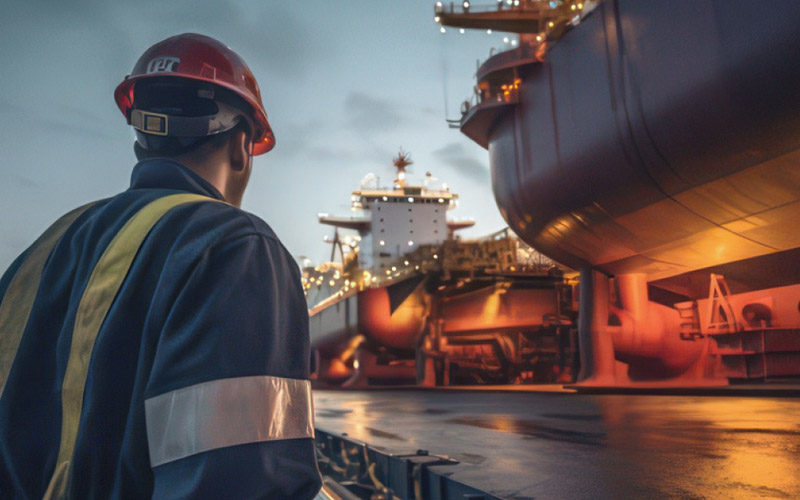
From the very beginning of the SWEPPP project, we have emphasized a simple but powerful idea: well-being starts with oneself and ripples outward - towards our families, friends, communities, and the professional environments in which we interact every day.
This interconnected understanding of well-being becomes even more critical in sectors where working conditions are particularly demanding. The maritime industry is a clear example. People working at sea often face long periods of isolation, limited social interaction, high responsibility, and continuous operational pressure.
Research increasingly highlights the urgency of this topic. The International Maritime Organization (IMO) identifies fatigue as a critical risk factor affecting seafarers’ performance and safety, often linked to demanding working conditions and extended periods on board [1]. In addition, IMO guidance on crew welfare and mental wellness highlights the psychological strain associated with prolonged time at sea and limited social interaction [2]. The International Labour Organization, through the Maritime Labour Convention, further emphasizes the importance of regulating working and living conditions to protect seafarers’ well-being [3].
At the same time, the maritime industry is undergoing an important shift. Beyond traditional safety checklists and technical compliance, there is growing recognition of well-being-related and psychosocial risks as integral to overall safety. Recent developments led by the International Maritime Organization show that factors such as fatigue, mental health, and even harassment and bullying are increasingly being addressed within safety management frameworks [4].
In line with these developments, the current hosting of Prof. Andrea Russo at the Steinbeis School of Sustainable Innovation and Transformation (SIT) offers a timely opportunity to explore these topics further. Prof. Russo, from the University of Split, whose work bridges psychology and public health, focuses on psychological well-being in high-risk and high-responsibility sectors. Together, the SIT team and Prof. Russo are working on the development of a new training offer addressing human factor risk management in the maritime industry. This initiative aims to support organizations in recognizing early warning signs, strengthening communication, and fostering healthier, more resilient work environments on board.
In this blog, we share a short interview with Prof. Russo, highlighting key insights from her work and our ongoing collaboration.
Key Takeaways from the Interview
Before diving into the full interview, here are some of the main insights:
Well-being is directly linked to safety and performance: Psychological well-being is not separate from operational risk - it directly affects communication, decision-making, and the ability to respond to problems in time.
Risks often start silently: Early signs such as withdrawal, reduced communication, or emotional disconnection are often overlooked, yet they are critical indicators of deeper issues.
Maritime work amplifies human challenges: Isolation, fatigue, hierarchical structures, and multicultural crews create a unique combination of pressures that require tailored approaches.
Psychological safety is essential for risk prevention: When employees do not feel safe to speak up, risks remain hidden and can escalate into serious incidents.
Harassment and misconduct are now recognized as safety risks: Modern frameworks increasingly include bullying, harassment, and abuse of power as part of risk management and compliance.
Organizations need a cultural shift - not just procedures: True safety and resilience require trust, communication, and leadership maturity - not only technical compliance.
Early intervention makes the difference: Creating environments where people feel able to speak up early can prevent conflict, breakdown, and accidents.
–
We explored these themes further in our conversation with Prof. Andrea Russo, whom we thank for her valuable insights. You can read the full interview below.
–
References
[1] International Maritime Organization (IMO) (n.d.), Fatigue. Available at: https://www.imo.org/en/ourwork/humanelement/pages/fatigue.aspx (Accessed: 16.04.2026)
[2] International Maritime Organization (IMO) (2021), Crew welfare management and mental wellness (2nd ed.). Available at: https://wwwcdn.imo.org/localresources/en/MediaCentre/HotTopics/Documents/2021_Crew%20Welfare_Management_and%20Mental_Wellness_2nd-ed-web_2.pdf (Accessed: 16.04.2026)
[3] International Labour Organization (ILO) (2006), Maritime Labour Convention (MLC), 2006. Available at: https://www.ilo.org/international-labour-standards/maritime-labour-convention-2006 (Accessed: 16.04.2026)
[4] International Maritime Organization (2025), Seafarer fatigue, work hours and harassment at sea. Available at: https://www.imo.org/en/mediacentre/pressbriefings/pages/seafarer-fatigue-work-hours-harassment.aspx (Accessed: 16.04.2026)
Author: Ela Kurtcu - EMG / SIT
Interview conducted in Berlin on 14.04.2026.
Publication Date: 17.04.2026